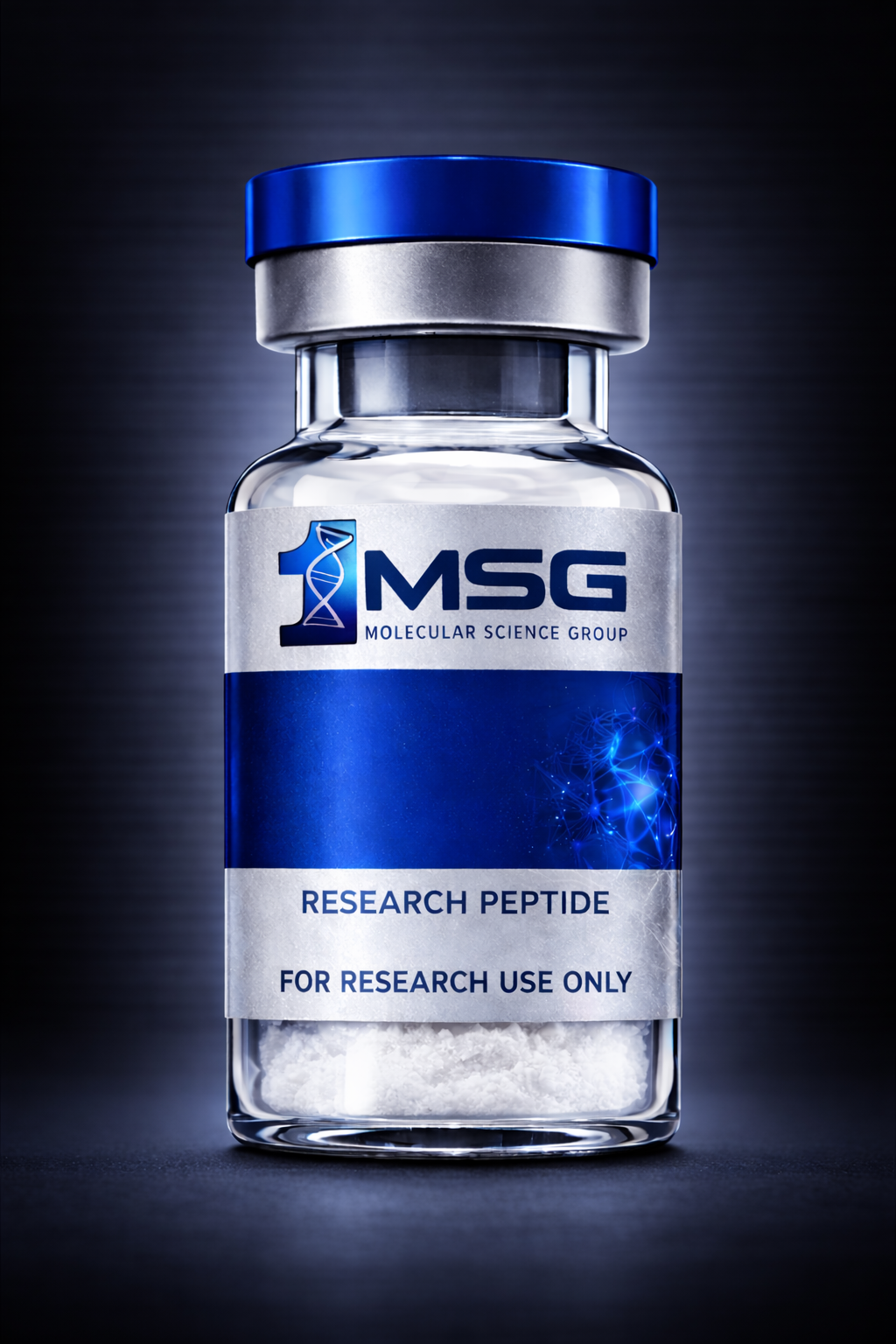
Description
What is Gonadorrlin Acetate?
Gonadorrlin Acetate is a synthetic form of gonadorelin, a peptide that mirrors the activity of the body’s natural gonadotropin-releasing hormone (GnRH). In plain English, it is a signaling peptide used in research to study how the brain communicates with the pituitary gland to influence reproductive hormone output.
This matters because GnRH sits near the top of an important hormone chain. When this signal is present, the pituitary may respond by releasing luteinizing hormone (LH) and follicle-stimulating hormone (FSH), two hormones that are central to reproductive endocrinology research. Because of that upstream role, Gonadorrlin Acetate has gained attention in studies focused on hormone signaling, feedback loops, pituitary responsiveness, and endocrine regulation.
For customers browsing research peptides, Gonadorrlin Acetate stands out as a compound commonly associated with precise hormone pathway research rather than broad, non-specific peptide interest. It is often discussed in settings where investigators want to better understand signaling rhythm, receptor activation, and the way endocrine systems coordinate downstream effects.
How Gonadorrlin Acetate Works
In simple terms, Gonadorrlin Acetate acts like a GnRH signal. Researchers are interested in it because GnRH is one of the key messengers that helps regulate reproductive hormone release.
- Targets GnRH receptors: It is being studied for interaction with receptors in the pituitary.
- Influences LH and FSH release: These downstream hormones are often measured in endocrine research.
- Supports signaling pathway studies: It is commonly used to examine hypothalamic-pituitary-gonadal axis communication.
- Helps explore feedback regulation: Researchers are interested in how upstream signals affect broader hormone balance.
One reason this peptide gets attention is that hormone signaling is not just about whether a signal exists, but also how and when it appears. GnRH-related compounds are often discussed in relation to pulsatile signaling patterns, receptor sensitivity, and pituitary response over time.
Why Gonadorrlin Acetate Is Getting Attention
Gonadorrlin Acetate has gained attention because it sits at a critical control point in endocrine research. Instead of acting far downstream, it is being studied for its role in initiating a broader hormone cascade. That makes it especially interesting to researchers looking at reproductive hormone dynamics, pituitary function, and endocrine communication.
It is often discussed for:
- Reproductive hormone signaling research
- Pituitary stimulation studies
- Hypothalamic-pituitary-gonadal axis investigation
- Endocrine feedback and regulation models
- Comparative work involving GnRH analogs and related peptides
Compared with compounds that influence only one endpoint, Gonadorrlin Acetate is commonly compared to other regulatory peptides because it may help researchers observe a more complete signaling sequence from receptor activation to downstream hormone response.
Potential Benefits Being Studied
As a research peptide, Gonadorrlin Acetate is being studied for several areas of scientific interest. These are not guaranteed outcomes, but they help explain why the compound remains relevant in peptide catalogs and endocrine-focused discussions.
- Hormone cascade research: Often studied for how GnRH-like signaling may influence LH and FSH release.
- Pituitary responsiveness: Researchers are interested in how the pituitary reacts to peptide stimulation.
- Endocrine timing and rhythm: Commonly discussed in relation to pulsatile hormone signaling.
- Receptor interaction studies: Has shown interest in studies involving GnRH receptor activity and signaling efficiency.
- Reproductive endocrinology models: Often used in work examining upstream control of reproductive hormone pathways.
Because of its role in a well-known signaling axis, Gonadorrlin Acetate is frequently viewed as a useful peptide for understanding control mechanisms rather than just isolated hormone levels.
What Makes Gonadorrlin Acetate Stand Out
What makes Gonadorrlin Acetate stand out is its direct relevance to one of the body’s most studied endocrine communication systems. Rather than being a general-purpose peptide, it is closely associated with a specific signaling role that researchers can track and evaluate.
- Clear biological target: Linked to GnRH receptor-mediated signaling.
- Strong endocrine relevance: Frequently discussed in hormone regulation research.
- Useful for pathway mapping: Helps researchers examine upstream-to-downstream hormone relationships.
- Common comparison point: Often compared to other GnRH-related compounds in peptide research.
- High research interest: Continues to attract attention in reproductive and pituitary signaling studies.
For many researchers, that combination of specificity and relevance is exactly why Gonadorrlin Acetate remains a notable peptide of interest.
Who Is Interested in Gonadorrlin Acetate?
Gonadorrlin Acetate is commonly of interest to laboratories and researchers focused on:
- Reproductive hormone pathways
- Peptide receptor signaling
- Pituitary and hypothalamic communication
- Endocrine feedback mechanisms
- Comparative peptide pharmacology
If you are exploring peptides that are being studied for upstream endocrine signaling, Gonadorrlin Acetate is one of the more recognizable names in this category.
Final Thoughts
What is Gonadorrlin Acetate? It is a GnRH-mimicking research peptide used to study how reproductive hormone signaling begins and how that signal influences downstream endocrine responses. In plain English, it helps researchers examine how one peptide message can trigger a broader hormone cascade.
Its growing visibility comes from its relevance to pituitary signaling, LH and FSH release, endocrine rhythm, and reproductive hormone research. For customers seeking a peptide with a clear scientific role and strong research interest, Gonadorrlin Acetate is a compelling addition to the research peptide category.