
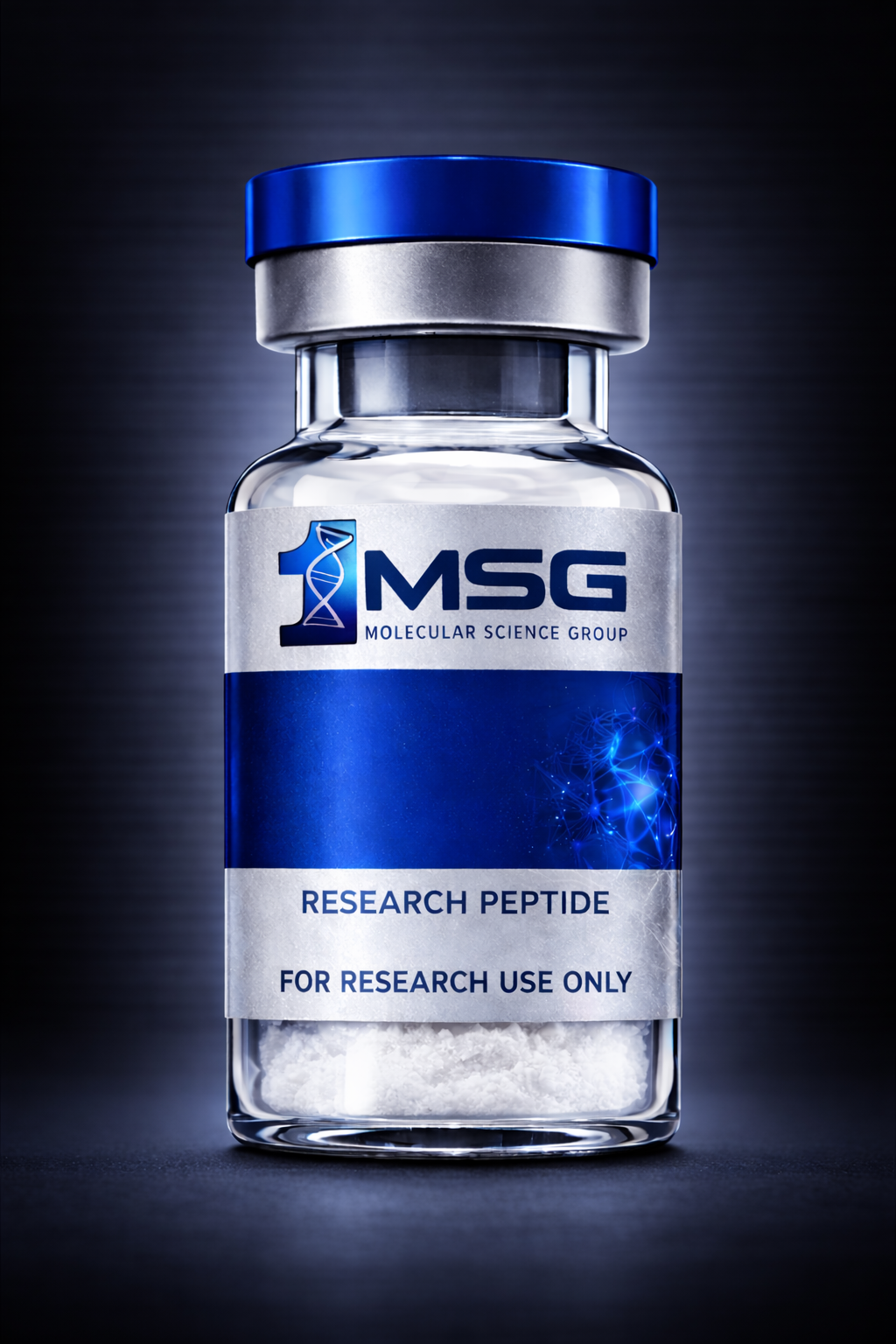
Description
What is Humanin?
Humanin is a mitochondrial-derived peptide, meaning it is a small peptide associated with signals that originate from the mitochondria, the part of the cell often described as its energy center. In plain English, Humanin is being studied as a messenger-like peptide that may help cells respond to stress and maintain function under challenging conditions.
Researchers are interested in Humanin because it has been linked in studies to cellular protection, metabolic signaling, and age-related biological processes. It is often discussed in the context of healthy aging research, brain and nerve cell interest, and broader investigations into how cells communicate during stress.
For customers browsing research peptides, Humanin stands out because it is not just another general peptide of interest. It has gained attention specifically for its potential role in mitochondrial communication, resilience signaling, and protective cellular pathways.
How Humanin Works
Humanin is commonly described as a peptide involved in the body’s internal stress-response signaling. While research is still evolving, it has shown interest in studies for how it may interact with pathways related to cell survival and metabolic regulation.
In simple terms, Humanin is being studied for how it may help cells respond more effectively when exposed to biological stress. Researchers often discuss its activity in relation to:
- Mitochondrial signaling and communication between the mitochondria and the rest of the cell
- Cell survival pathways that may help cells resist stress-related damage
- Neuroprotective research interest involving brain and nerve cell support
- Metabolic regulation, including interest in insulin signaling and glucose-related pathways
- Inflammation and oxidative stress research in age-related models
This makes Humanin especially interesting to researchers looking at the overlap between energy production, cellular stress, and long-term functional health.
Why Humanin Is Getting Attention
Humanin has gained attention because it sits at the intersection of several high-interest research areas. Rather than being studied for only one narrow mechanism, it is often discussed across multiple categories of peptide and longevity research.
Researchers are interested in Humanin for reasons such as:
- Its association with healthy aging and longevity-related pathways
- Its role as a mitochondrial-derived peptide, a category receiving increasing scientific attention
- Its study interest in neuronal health and cognitive resilience
- Its relevance to metabolic function and insulin-related signaling
- Its potential connection to cellular protection under stress
Because of this broad research profile, Humanin is commonly compared to other compounds discussed in anti-aging and cellular health circles, yet it remains distinct due to its mitochondrial origin and signaling profile.
Potential Benefits Being Studied
Humanin is not marketed as a treatment or cure, but it has shown interest in studies involving several important biological themes. Depending on the research model, Humanin is often discussed for:
- Neuroprotection and support for brain-related cellular resilience
- Cell survival signaling during oxidative or metabolic stress
- Metabolic balance, including interest in glucose regulation pathways
- Age-related cellular function and healthy aging research
- Mitochondrial communication and stress adaptation
These are some of the main reasons customers exploring advanced research peptides may find Humanin especially compelling. It is not simply being studied as a performance-related peptide, but as a peptide with broader relevance to how cells adapt, communicate, and maintain function over time.
What Makes Humanin Stand Out
Many research peptides attract attention for one specific category, such as recovery, metabolism, or signaling. Humanin stands out because it is often discussed as a multi-dimensional peptide of interest with relevance to several major areas of modern research.
- Mitochondrial origin: Humanin belongs to a unique and increasingly discussed class of peptides
- Broad research appeal: It is being studied in neurobiology, metabolism, aging, and stress-response models
- Protective signaling interest: Researchers often focus on its connection to resilience pathways rather than simple stimulation
- Longevity conversation relevance: Humanin is frequently mentioned in discussions around age-related decline and cellular maintenance
If you are looking at peptides that go beyond surface-level interest, Humanin is one of the more intriguing options in the catalog because of its connection to cellular defense, mitochondrial biology, and adaptive signaling.
Who Is Interested in Humanin Research?
Humanin is commonly explored by researchers focused on:
- Healthy aging and longevity science
- Mitochondrial biology
- Neuroprotection and cognitive research
- Metabolic and glucose-regulation pathways
- Cell stress and survival signaling
This broad interest is part of why Humanin continues to gain visibility. It appeals to those studying not only what happens when cells perform well, but also how they respond when challenged.
Final Thoughts on Humanin
Humanin is a mitochondrial-derived research peptide being studied for its possible role in cellular protection, metabolic signaling, neuroprotective pathways, and healthy aging research. In plain English, it is getting attention because it may help explain how cells defend themselves, adapt to stress, and maintain function over time.
For peptide researchers and customers interested in advanced signaling compounds, Humanin offers a compelling profile that is both scientifically relevant and easy to understand: a small peptide with big research interest in mitochondrial communication, resilience, and age-related biology.
Reviews
There are no reviews yet.