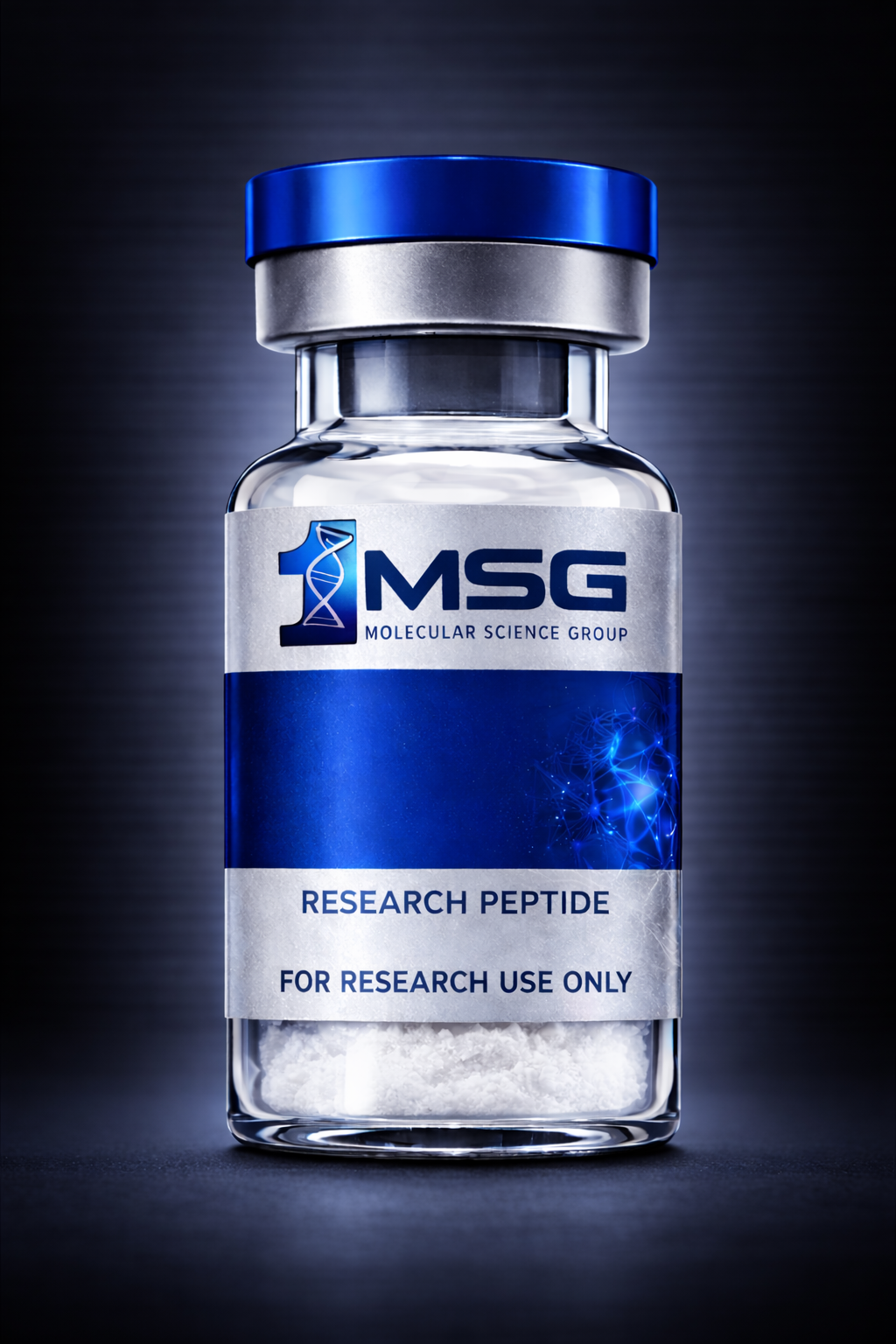
Description
What is Hexarelin Acetate?
Hexarelin Acetate is a synthetic peptide in the growth hormone secretagogue family, often classified among the better-known GHRPs (growth hormone releasing peptides). In simple terms, it is a lab-produced peptide that is being studied for its ability to signal pathways involved in growth hormone release. Because of this, Hexarelin has become a frequent topic in research conversations around GH signaling, IGF-1 activity, body composition, recovery, and performance-related physiology.
Researchers are interested in Hexarelin Acetate because it is commonly viewed as a potent GH secretagogue with distinct characteristics compared with other peptides in the same category. It is often discussed by those comparing compounds such as GHRP-2, GHRP-6, Ipamorelin, and MK-related GH pathway agents, especially when looking at strength of signaling, receptor activity, and broader study interest.
How Hexarelin Acetate Works
Hexarelin is being studied for its interaction with the ghrelin receptor / growth hormone secretagogue receptor (GHS-R). When this pathway is activated, it can signal the pituitary in ways that are associated with growth hormone release. That is the main reason this peptide gets so much attention in the growth hormone category.
In plain English: Hexarelin is not simply “growth hormone in a vial.” Instead, it is a peptide being studied because it may encourage the body’s own GH signaling response through receptor-level activity.
- Targets GH-related signaling: commonly studied for its effect on growth hormone release pathways.
- Associated with IGF pathway interest: GH signaling often leads researchers to examine downstream IGF-1 related activity.
- Studied for body composition relevance: often discussed in relation to lean mass support and fat-loss-related research interest.
- Recovery-focused attention: researchers often explore GH secretagogues in connection with tissue recovery and training adaptation models.
- Compared for potency: Hexarelin has gained attention as one of the stronger peptides in the GHRP category.
Why Hexarelin Acetate Is Getting Attention
Hexarelin Acetate stands out because it is frequently described as a high-interest peptide for robust GH pathway stimulation. In peptide research circles, some compounds attract attention because they are mild, selective, or easier to compare. Hexarelin attracts attention because it is often viewed as strong, direct, and highly relevant to growth hormone signaling studies.
It is also commonly discussed for how it compares with other secretagogues:
- Compared to GHRP-6: often discussed as having strong GH-related signaling without the same level of appetite-focused discussion.
- Compared to GHRP-2: frequently evaluated for potency and receptor-driven effects.
- Compared to Ipamorelin: often seen as less “mild” and more associated with stronger secretagogue interest.
- Compared to direct GH approaches: researchers may prefer studying secretagogues when they want to examine endogenous signaling pathways instead of exogenous hormone replacement models.
For customers browsing this category, that matters because Hexarelin is not just another peptide name. It is a compound with a clear identity in the market: a well-known GH secretagogue with strong research attention and frequent comparison value.
Potential Benefits Being Studied
Hexarelin Acetate is being studied across several areas of interest related to growth hormone physiology and downstream signaling. While research discussions vary, the peptide is commonly explored for:
- Growth hormone release and pituitary signaling
- IGF-1 pathway interest as a downstream area of study
- Body composition research, including lean mass and fat metabolism discussions
- Recovery-related interest in training and tissue-support models
- Performance physiology and anabolic signaling research
- Muscle preservation interest in catabolic or stress-related study settings
- Cardiovascular and tissue-focused research attention in select preclinical discussions
Some researchers are especially interested in Hexarelin because it has shown interest in studies involving not only GH release, but also broader physiological signaling that may make it relevant in more than one research context.
What Makes Hexarelin Acetate Stand Out
There are many peptides in the growth hormone category, but Hexarelin Acetate has a few characteristics that make it especially notable:
- Strong category recognition: a familiar name among GH secretagogues.
- Potency-related interest: often discussed as a stronger GHRP option.
- Clear mechanism relevance: directly tied to growth hormone secretagogue receptor activity.
- Frequent comparison value: useful for those evaluating different GH pathway peptides.
- Broad research appeal: body composition, recovery, signaling, and performance-related interest all contribute to its popularity.
That combination of recognition, mechanism, and research interest is why Hexarelin remains a sought-after peptide for those specifically looking at the growth hormone segment of the catalog.
Who Is Interested in Hexarelin Acetate?
Hexarelin Acetate typically attracts attention from buyers and researchers who are specifically looking for:
- Peptides associated with GH pathway stimulation
- Compounds commonly discussed for body composition research
- Products compared with GHRP-2, GHRP-6, and Ipamorelin
- Peptides with strong relevance to recovery and anabolic signaling discussions
- Established names in the growth hormone secretagogue category
Important Research Perspective
Hexarelin Acetate is sold for research use and educational catalog purposes. It is a compound of interest because of its role in growth hormone signaling research, not because of any guaranteed outcome. As with other peptides in this category, discussions often focus on mechanisms, receptor activity, and study observations rather than certainty.
If you are comparing growth hormone pathway peptides, Hexarelin Acetate stands out as a recognized and widely discussed option with strong relevance to GH release research, IGF-related interest, and body composition-focused study models.