
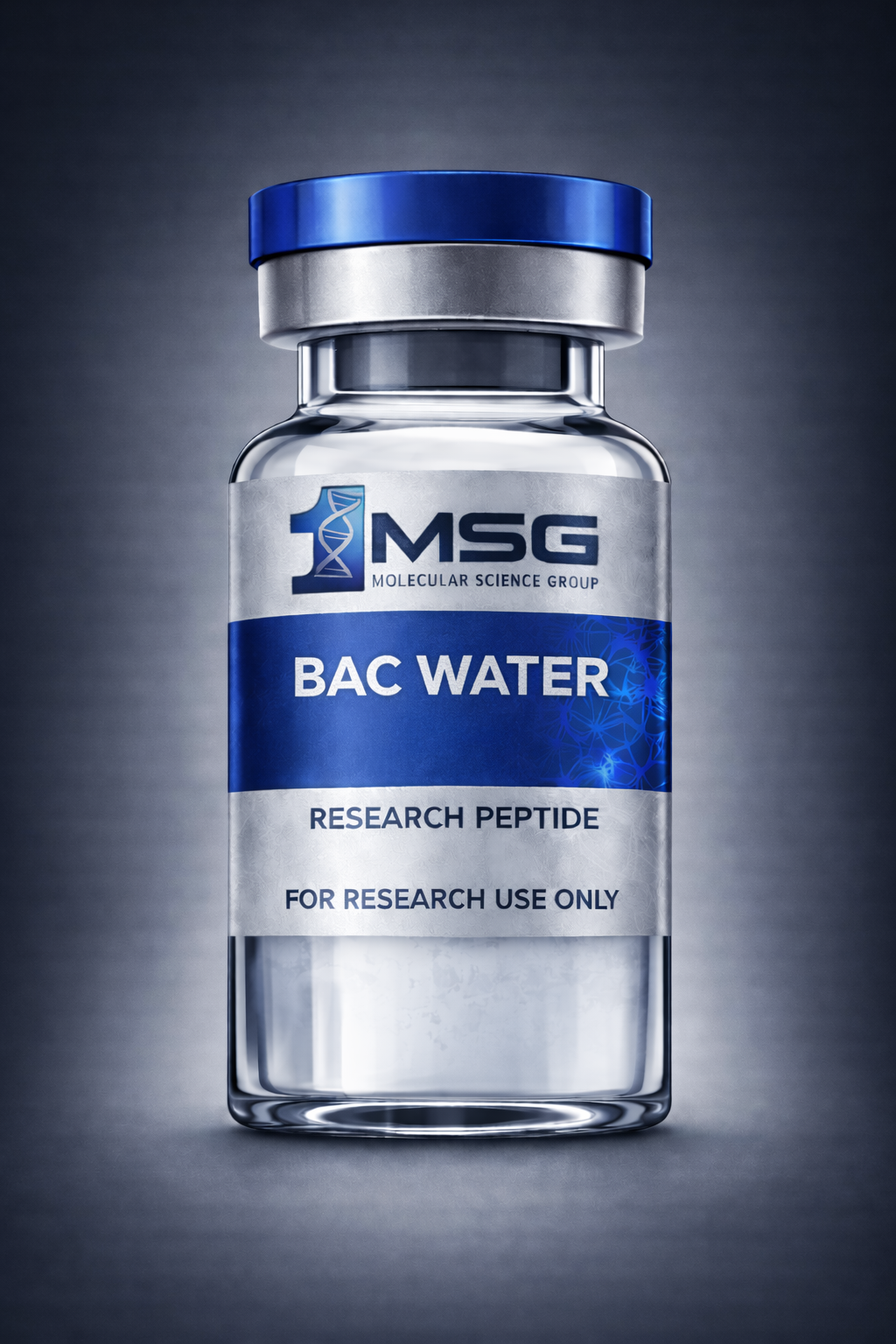
Description
What is BAC Water?
BAC Water stands for bacteriostatic water. In simple terms, it is sterile water that contains a small amount of benzyl alcohol, which helps slow the growth of bacteria once the vial has been opened. That is why it is commonly discussed as a practical option for reconstituting lyophilized peptides and other research compounds that are handled in small amounts over time.
For customers browsing peptide and research accessories, BAC Water is not the active compound itself. Instead, it is an important support product used to prepare certain materials for research handling. People often choose it because it offers a convenient and familiar option when a sterile mixing medium is needed.
How BAC Water Works
Plain English version: BAC Water is used as a clean liquid base for dissolving or reconstituting certain powdered research materials. The added benzyl alcohol is included to help reduce the chance of bacterial growth after the vial has been punctured, which is why it is commonly preferred over plain sterile water in multi-use research settings.
- Sterile water base: provides a clean medium for reconstitution.
- Benzyl alcohol content: helps inhibit bacterial growth in opened multi-dose use scenarios.
- Common research accessory: often paired with lyophilized peptides and similar compounds.
- Convenience factor: frequently chosen when repeated access to the same vial may be needed.
Researchers are interested in BAC Water because proper preparation can affect handling consistency, ease of use, and overall workflow. While it is a simple product, it plays a very practical role in many peptide-related setups.
Why BAC Water Is Getting Attention
BAC Water has gained attention largely because peptide research products have become more widely discussed. As interest in reconstitution practices has grown, so has interest in the accessories that support cleaner, more consistent preparation. BAC Water is often one of the first items people look for when assembling a complete research toolkit.
It is commonly compared to sterile water, but the key difference is the bacteriostatic component. That difference is exactly why BAC Water is often discussed for situations where a vial may be accessed more than once.
- Often discussed alongside peptide reconstitution supplies
- Commonly compared to plain sterile water for convenience
- Chosen for flexibility in multi-use handling contexts
- Widely recognized as a staple accessory in research supply catalogs
Potential Benefits Being Studied
Because BAC Water is a support product rather than a bioactive compound, the interest around it is mostly practical rather than pharmacological. People are typically interested in how it may support cleaner preparation and easier handling of research materials.
- Reconstitution support: commonly used to dissolve lyophilized compounds.
- Handling convenience: often preferred when repeat vial access is expected.
- Workflow consistency: helps standardize preparation practices in research settings.
- Accessory value: useful for buyers who want a complete peptide handling setup.
In other words, BAC Water is getting attention not because it acts like a peptide, but because it supports the way peptides and similar compounds are prepared and managed.
What Makes BAC Water Stand Out
What makes BAC Water stand out is its simplicity and usefulness. It is one of those products that may not seem exciting at first glance, but it becomes essential once you understand how often it is used in peptide and compound preparation.
- Purpose-built for reconstitution support
- Contains benzyl alcohol to help limit bacterial growth
- Common accessory for peptide research buyers
- Useful addition to a complete lab supply order
For many customers, the value is straightforward: if you are purchasing lyophilized research products, BAC Water is often the matching accessory that helps make preparation more practical.
Who Commonly Buys BAC Water?
BAC Water is commonly purchased by customers looking for a sterile reconstitution medium for peptides, lyophilized compounds, and related research materials. It is especially relevant for those who want a familiar, widely used accessory rather than sourcing preparation supplies separately.
People browsing this product usually care about:
- Compatibility with peptide-related research workflows
- Convenience when preparing powdered compounds
- Keeping a more complete and organized accessory setup
- Choosing a standard item commonly used in research environments
Important Notes
BAC Water is an accessory product. It is not a treatment, not a diagnostic product, and not the active research compound itself. It should be handled appropriately and used only in suitable professional or research contexts according to applicable standards and product guidance.
If you are comparing support items for peptide preparation, BAC Water remains one of the most recognized and commonly selected options because it is simple, practical, and directly relevant to reconstitution needs.
Reviews
There are no reviews yet.