
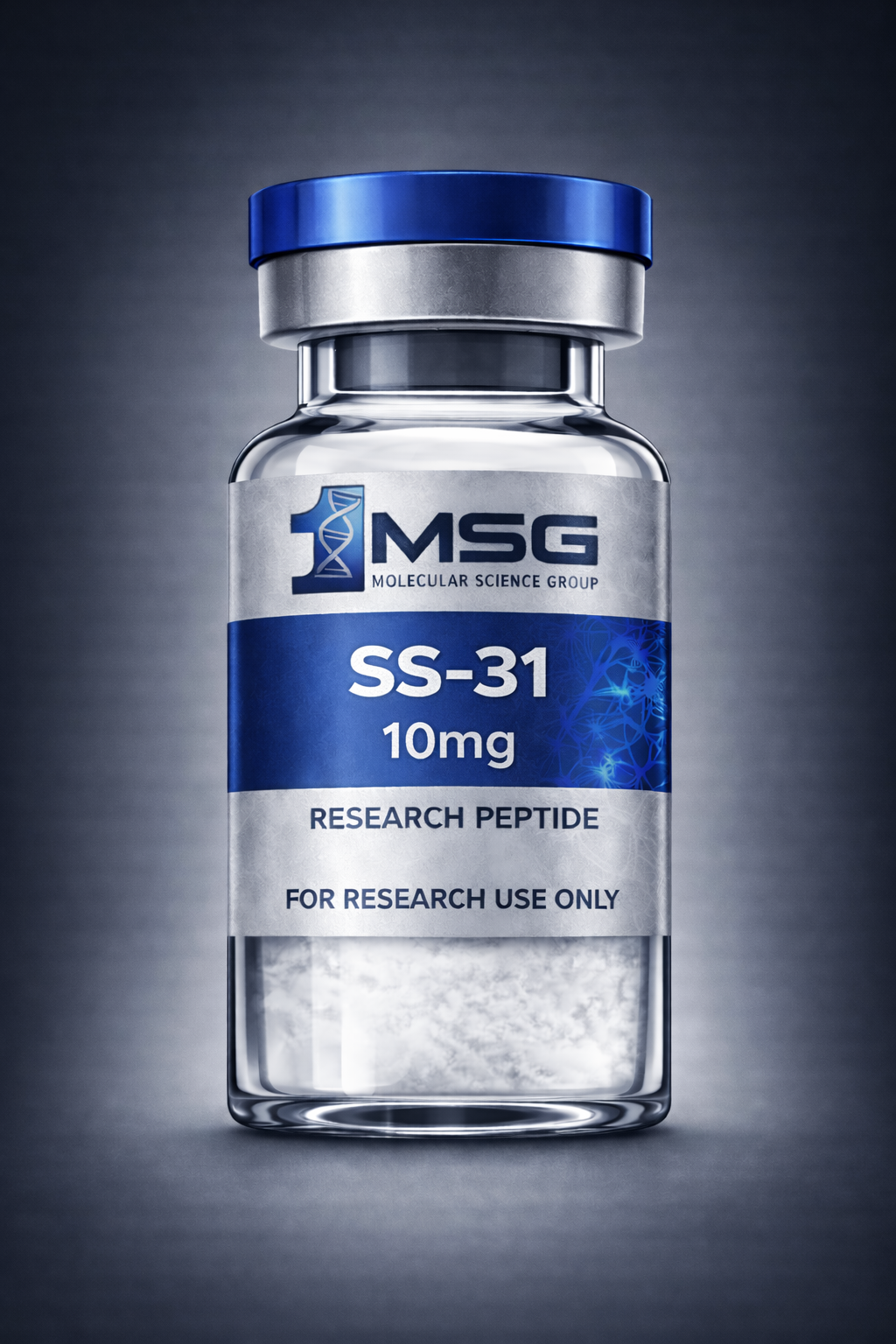
Description
What is SS-31?
SS-31 is a synthetic mitochondria-targeting peptide being studied for its potential role in supporting mitochondrial health and cellular energy production. In simple terms, it is designed to interact with structures inside mitochondria—the parts of cells responsible for producing energy. Because mitochondria are central to energy output, recovery, and cellular resilience, SS-31 has gained attention in a wide range of research settings.
Researchers are especially interested in SS-31 because it is commonly discussed for its interaction with cardiolipin, a unique phospholipid found in the inner mitochondrial membrane. This area of study has made SS-31 a standout compound in conversations around mitochondrial efficiency, oxidative stress, and age-related decline in cellular performance.
How SS-31 Works
In plain English, SS-31 is being studied as a peptide that may help mitochondria function more efficiently under stress. Rather than acting like a general stimulant, it has gained attention for its targeted mitochondrial focus.
- Targets mitochondria directly, rather than broadly affecting many unrelated systems
- Interacts with cardiolipin, a key component of the inner mitochondrial membrane
- Is being studied for mitochondrial efficiency and how cells produce and manage energy
- Has shown interest in studies involving oxidative stress and cellular resilience
- Is often discussed for tissue energy demands, recovery interest, and age-related mitochondrial changes
This targeted mechanism is one reason SS-31 is commonly compared to other compounds aimed at energy support, but it remains distinct because of its specific mitochondrial research profile.
Why SS-31 Is Getting Attention
Interest in SS-31 has grown because mitochondrial dysfunction is often discussed across many areas of modern research. When mitochondria are not functioning well, cells may become less efficient at producing energy and more vulnerable to stress. That has made mitochondria-focused compounds especially relevant to researchers looking at performance, recovery, healthy aging, and high-energy tissues such as muscle, heart, and nervous system tissue.
SS-31 has gained attention for being studied in contexts involving:
- Cellular energy production
- Mitochondrial membrane stability
- Oxidative stress response
- Recovery and resilience research
- Age-related mitochondrial function
- High-demand tissues that rely heavily on efficient energy generation
For customers exploring the mitochondrial category, SS-31 stands out because it is not simply marketed as a generic “energy” compound. It is being studied for a more specific and mechanistic role at the mitochondrial level.
Potential Benefits Being Studied
While research is ongoing, SS-31 is commonly discussed for several areas of scientific interest. These are not guaranteed outcomes, but they help explain why the peptide continues to attract attention.
- Mitochondrial support: Researchers are interested in whether SS-31 may help support mitochondrial structure and function under stress.
- Cellular energy efficiency: It is often discussed for how cells generate and use energy more effectively.
- Oxidative stress interest: SS-31 has shown interest in studies involving oxidative damage and mitochondrial protection.
- Recovery research: Because energy production is essential to recovery processes, the compound is often discussed in this context.
- Healthy aging interest: Mitochondrial decline is a major topic in aging research, which is one reason SS-31 continues to be studied.
What Makes SS-31 Stand Out
There are many compounds in the broader wellness and research space that are discussed for energy, performance, or recovery. SS-31 stands out because its research attention is centered on mitochondria themselves, especially the inner mitochondrial membrane.
- Highly specific research focus compared with broad-spectrum support compounds
- Frequently discussed in mitochondrial science rather than general stimulant conversations
- Commonly compared to other mitochondrial support agents, yet notable for its peptide-based targeting approach
- Relevant to multiple areas of study where cellular energy matters
This makes SS-31 especially appealing to customers who are not just looking for a generic product, but who want a compound with a clear scientific niche and strong research relevance.
Who Is Interested in SS-31?
SS-31 is often explored by customers and researchers who are specifically interested in mitochondrial biology, cellular performance, and compounds that are being studied for energy-related mechanisms. It is commonly discussed alongside topics such as:
- Mitochondrial optimization
- Cellular resilience
- Performance and recovery research
- Oxidative stress management interest
- Age-related cellular function
If you are browsing mitochondrial compounds and want something with a more targeted scientific identity, SS-31 is one of the most recognized names in this category.
Important Research Perspective
SS-31 is a research compound that has gained attention for its mitochondrial focus. Interest in this peptide comes from its mechanism and study profile, not from simple hype. As with all research materials, ongoing investigation is important, and discussions around SS-31 should be understood in the context of emerging science rather than guaranteed outcomes.
In short: SS-31 is a mitochondria-targeting peptide being studied for how it may support mitochondrial function, cellular energy efficiency, and resilience under stress. That specific focus is exactly why it continues to attract so much attention in mitochondrial research.
Reviews
There are no reviews yet.