Description
What is MOTS-C?
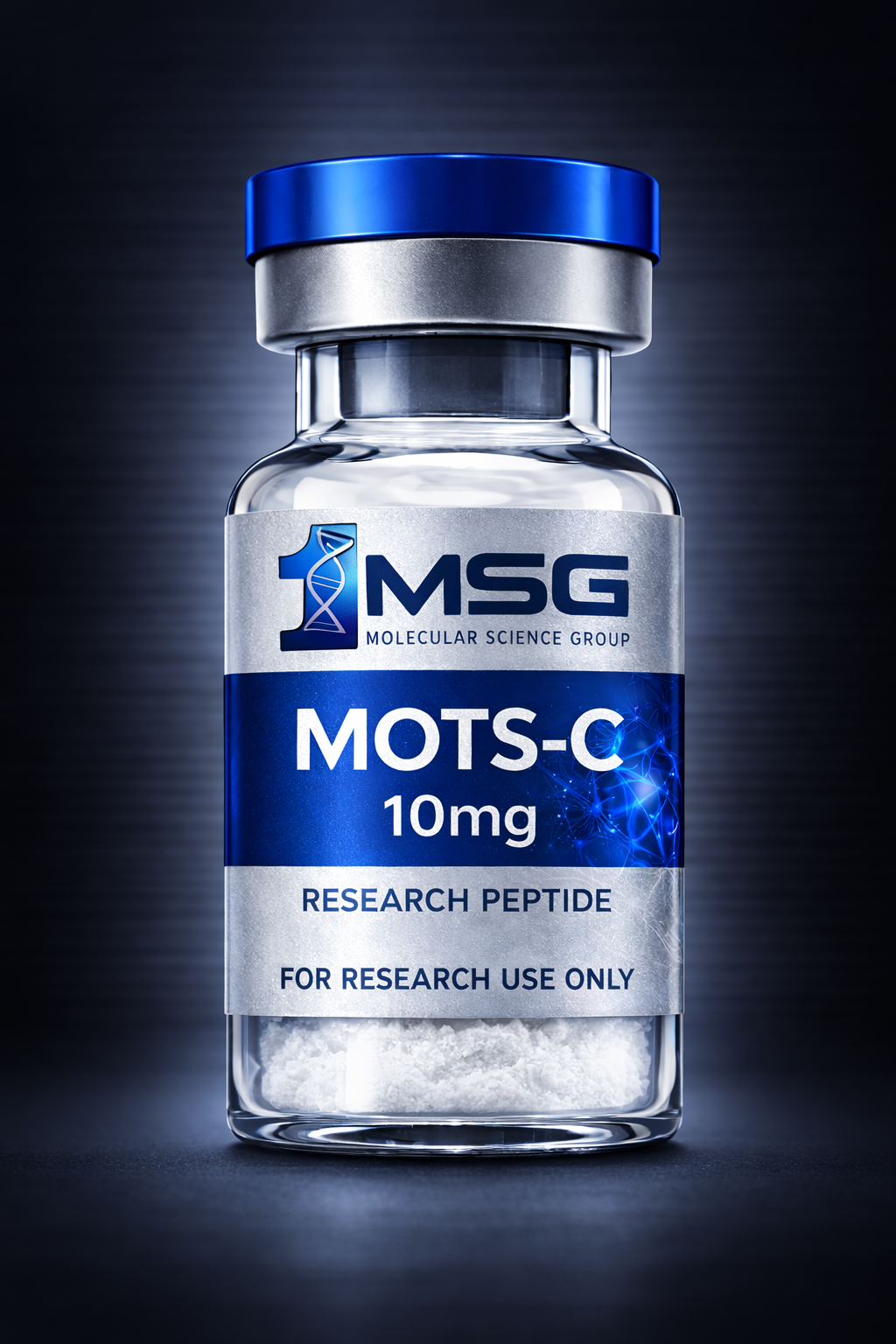
MOTS-C is a naturally occurring mitochondrial-derived peptide, meaning it comes from the mitochondria—the parts of cells often described as the cell’s energy centers. Unlike many compounds that are discussed only in general wellness terms, MOTS-C has become especially interesting to researchers because it appears to act like a signaling molecule involved in how the body responds to energy use, metabolic stress, and nutrient availability.
In plain English, MOTS-C is being studied because it may help explain how cells adapt when energy demand changes. That is a big reason it has gained attention in conversations around metabolism, exercise response, glucose regulation, mitochondrial health, and healthy aging research.
Customers browsing this category are usually looking for compounds connected to metabolic efficiency and mitochondrial performance. MOTS-C stands out because it is commonly compared to other metabolic research peptides, yet it has a unique identity tied directly to mitochondrial signaling.
How MOTS-C Works
MOTS-C is being studied for how it may influence the body’s response to metabolic stress. Researchers are interested in its apparent role in helping cells shift how they use fuel, especially under conditions involving exercise, calorie demand, or changes in glucose handling.
While research is still evolving, MOTS-C is often discussed for mechanisms related to:
- Cellular energy sensing and adaptation
- Glucose metabolism and insulin-related signaling interest
- Metabolic flexibility, or how efficiently the body switches between fuel sources
- Mitochondrial communication with the rest of the cell
- Exercise-mimetic and endurance-related research attention
- Stress-response pathways linked to metabolic resilience
One reason MOTS-C gets so much attention is that it is not just being studied as a passive peptide. It is often discussed as an active messenger that may help regulate how cells respond when energy is low or demand is high.
Why MOTS-C Is Getting Attention
MOTS-C has gained attention because modern metabolic research increasingly focuses on mitochondria—not just as energy producers, but as signaling hubs that may influence whole-body physiology. A peptide that originates from mitochondria and appears connected to metabolic adaptation naturally draws interest.
Researchers are especially interested in MOTS-C in areas such as:
- Metabolic health research
- Body composition and energy expenditure interest
- Glucose regulation studies
- Exercise performance and recovery-related attention
- Healthy aging and longevity pathway research
- Mitochondrial efficiency and resilience
It is also commonly discussed alongside compounds being studied for AMPK-related signaling, insulin sensitivity, endurance adaptation, and nutrient-sensing pathways. For customers comparing options in the metabolic and mitochondrial categories, that makes MOTS-C especially relevant.
Potential Benefits Being Studied
MOTS-C is being studied for several areas of interest that matter to researchers focused on metabolism and performance biology. While no outcome can be guaranteed, published interest has often centered on observations related to:
- Support for metabolic adaptation during energy stress
- Interest in glucose handling and insulin-response pathways
- Exercise-related signaling and endurance-associated research
- Body composition interest in metabolic study settings
- Mitochondrial function and cellular energy efficiency
- Healthy aging research involving stress-response pathways
People are often drawn to MOTS-C because it sits at the intersection of several high-interest topics: metabolism, mitochondria, exercise biology, and longevity science. That overlap is a major reason it continues to be discussed in advanced peptide research circles.
What Makes MOTS-C Stand Out
Many metabolic compounds are discussed in terms of broad energy support, but MOTS-C stands out because of where it comes from and what it may signal. As a mitochondrial-derived peptide, it is often viewed as part of a newer and more specialized category of research compounds tied to intracellular communication.
What makes it especially notable:
- It is derived from mitochondrial biology, not just general peptide signaling
- It has gained attention for metabolic and exercise-related research
- It is commonly compared to compounds studied for energy regulation and nutrient sensing
- It appeals to researchers interested in glucose metabolism, mitochondrial resilience, and healthy aging pathways
- It bridges interest between performance-focused research and longevity-focused research
For someone browsing this product, the key takeaway is simple: MOTS-C is a peptide being studied for how mitochondria communicate metabolic stress and help shape the body’s energy response. That makes it one of the more intriguing compounds in the metabolic and mitochondrial research space.
Research Interest Summary
MOTS-C is often discussed for its potential relevance to:
- Metabolism and nutrient sensing
- Appetite and energy balance discussions in metabolic research contexts
- Glucose regulation and insulin sensitivity interest
- Exercise adaptation and endurance-related pathways
- Mitochondrial signaling and cellular resilience
- Healthy aging and longevity-oriented studies
As always, MOTS-C is best understood as a research peptide of growing scientific interest, especially for those following developments in mitochondrial science and metabolic regulation.