
Description
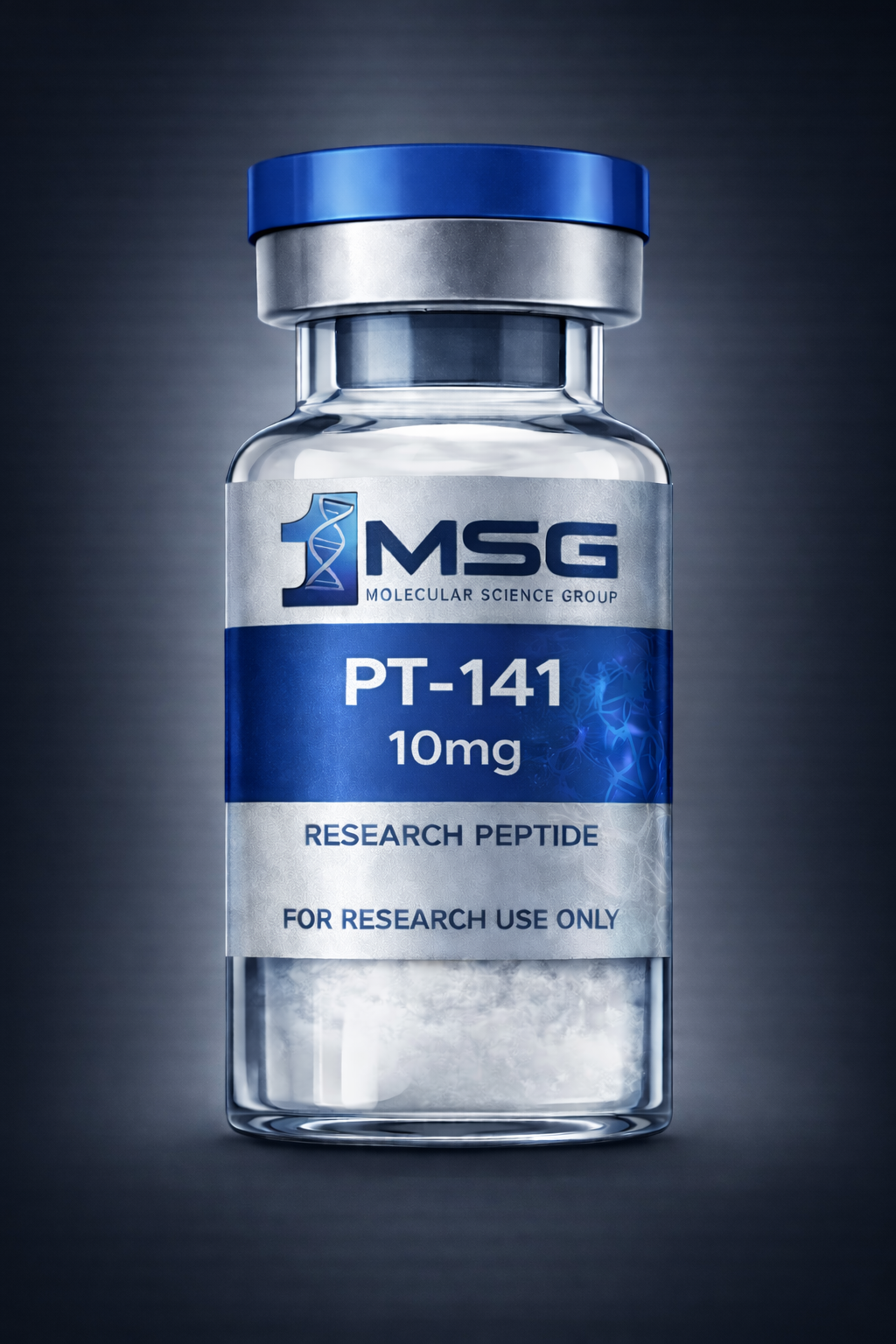
What is PT-141?
PT-141, also known as bremelanotide, is a synthetic research peptide derived from melanocortin-related peptide science. In plain English, it is a compound that researchers study because it appears to work through central nervous system signaling rather than simply focusing on blood flow pathways. That difference is a major reason PT-141 has gained so much attention in peptide research circles.
PT-141 is most often discussed in connection with melanocortin receptors, a receptor family involved in several biological functions including signaling related to behavior, appetite, pigmentation, and sexual response. Because of this mechanism, researchers are interested in PT-141 as a distinct compound with a very different profile from products commonly compared in the same conversation.
How PT-141 Works
PT-141 is being studied for its interaction with the melanocortin system, especially receptor activity linked to brain-based signaling. Rather than being known primarily for peripheral vascular action, PT-141 has gained attention for how it may influence signaling pathways involved in desire and arousal-related responses.
- Melanocortin receptor activity: often discussed as the core mechanism behind PT-141 research interest.
- Central signaling focus: researchers are interested in how PT-141 may act through the brain and nervous system.
- Different from standard comparisons: PT-141 is commonly compared to compounds associated with blood flow, but its study profile is notably different.
- Broad peptide relevance: melanocortin pathways are also studied in relation to appetite, energy balance, and behavioral signaling.
This mechanism is one reason PT-141 stands out in the research peptides category. For customers browsing peptide catalogs, that matters because it means PT-141 is not just another version of a familiar pathway—it represents a different research angle entirely.
Why PT-141 Is Getting Attention
PT-141 has gained attention because it sits at the intersection of neuropeptide research, melanocortin receptor science, and study interest in arousal-related signaling. Researchers are interested in compounds that may help explore how the brain influences sexual behavior and motivational response, and PT-141 is often discussed in that context.
It is also getting attention because it is commonly compared to better-known categories of compounds, yet it is not defined by the same mechanism. That makes it appealing to those looking for a peptide with a more central signaling profile rather than a purely circulatory one.
- Often discussed for libido and arousal research interest
- Being studied for melanocortin pathway activity
- Has shown interest in studies involving central nervous system signaling
- Commonly compared to other sexual wellness research compounds, while remaining mechanistically distinct
Potential Benefits Being Studied
As a research peptide, PT-141 is being studied for several areas of scientific interest. These are not guarantees of outcome, but they help explain why the compound continues to attract attention.
- Arousal-related signaling: PT-141 is often discussed for its relevance to desire and sexual response research.
- Central nervous system peptide activity: researchers are interested in how melanocortin signaling may influence behavior and motivation.
- Melanocortin receptor mapping: PT-141 is useful in conversations around receptor-specific peptide research.
- Broader behavioral signaling questions: the compound has gained attention in studies exploring how neuropeptides affect complex physiological responses.
For many customers, the appeal of PT-141 comes from the fact that it is not a generic peptide. It is a targeted compound with a recognizable research identity and a mechanism that continues to generate discussion.
What Makes PT-141 Stand Out
PT-141 stands out because it is tied to a receptor system that is broader and more behavior-linked than many compounds people first compare it to. Instead of being known mainly for vascular support pathways, PT-141 is often discussed for its brain-centered signaling profile.
- Unique mechanism: interest centers on melanocortin receptors rather than standard nitric oxide-style comparisons.
- Strong name recognition: PT-141 is one of the better-known peptides in arousal-related research discussions.
- Useful for specialized research: often chosen by those interested in receptor-specific peptide categories.
- High catalog relevance: customers searching for PT-141 usually already know it is a distinct compound with a specific research reputation.
If you are exploring research peptides and want a compound that is frequently discussed for central signaling, melanocortin activity, and arousal-related study interest, PT-141 is one of the most recognized names in that niche.
Important Research Context
PT-141 is sold as a research peptide. It is intended for laboratory and research use only. Discussions around this compound often involve study attention, receptor activity, and scientific interest, but not guaranteed outcomes. As with all research materials, proper handling, storage, and application depend on the specific research setting.
Reviews
There are no reviews yet.