
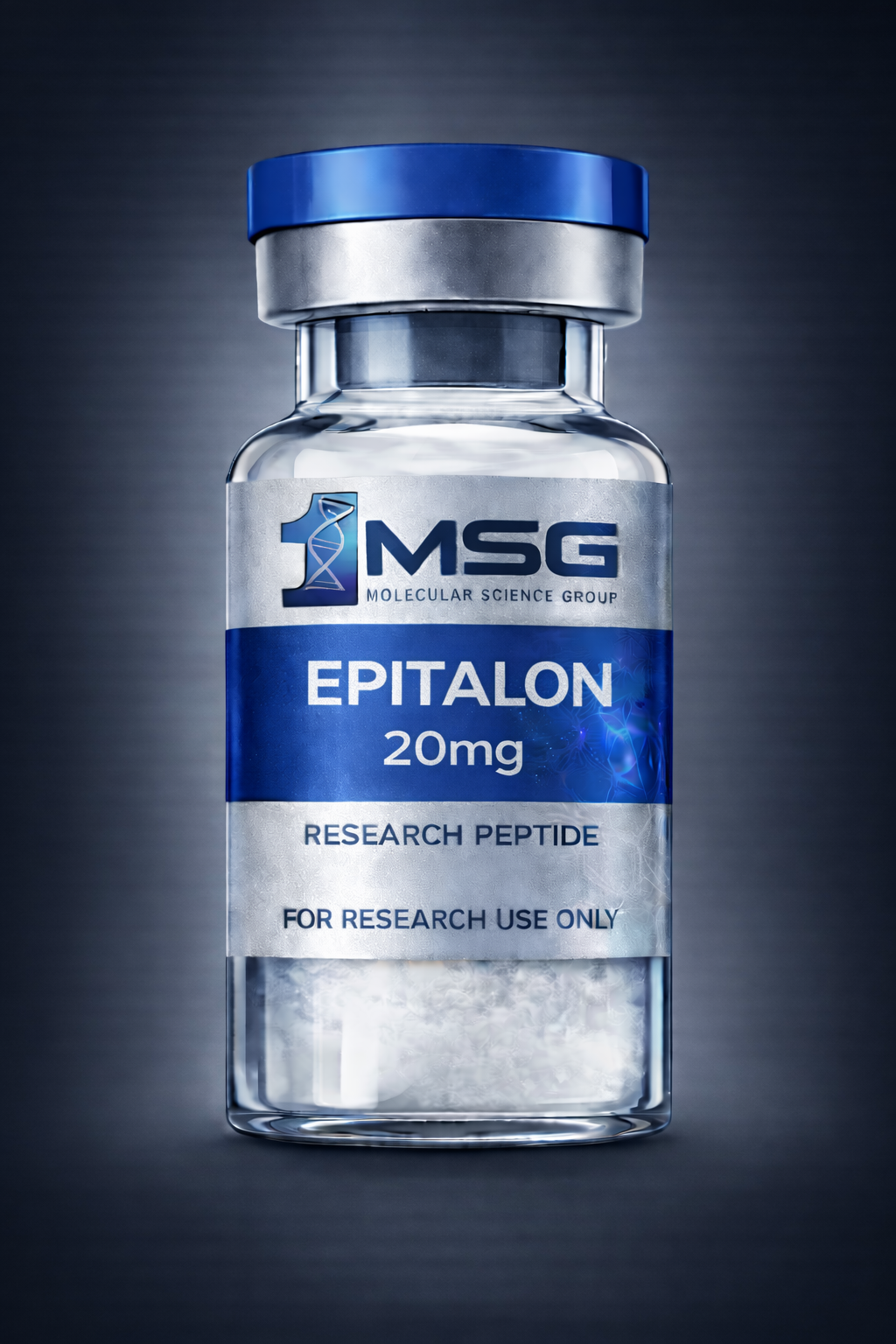
Description
What is Epithalon?
Epithalon is a synthetic peptide made up of four amino acids and is widely known in research circles for its connection to healthy aging and cellular longevity topics. In plain English, it is a small signaling compound that has gained attention because researchers are interested in how it may influence the way cells maintain themselves over time.
Epithalon is often discussed in relation to telomeres, which are protective caps at the ends of chromosomes. These structures naturally become shorter as cells divide and age. Because of this, Epithalon has become a well-known name in conversations around age-related research, cosmetic longevity interest, and cellular maintenance science.
For customers browsing peptide and cosmetic-focused products, Epithalon stands out because it is not just another general wellness compound. It has a specific identity in the market: a peptide being studied for how it may support the appearance and biology of aging at the cellular level.
How Epithalon Works
Epithalon is being studied for its potential interaction with cellular signaling pathways associated with aging and renewal. While research is still evolving, interest in this peptide often centers on how it may influence biological processes linked to long-term cellular function.
- Telomere-related interest: Epithalon has gained attention for its association with telomerase activity in research discussions.
- Cellular maintenance: Researchers are interested in whether it may support normal cell cycle and renewal-related processes.
- Oxidative stress interest: It is often discussed for its possible relationship to antioxidant defenses and age-related cellular stress.
- Healthy aging focus: Epithalon is commonly studied in the context of longevity, resilience, and age-associated cosmetic wellness topics.
Put simply, Epithalon is interesting because it is being studied as a peptide that may help support how cells manage aging-related wear over time.
Why Epithalon Is Getting Attention
Epithalon has gained attention because it sits at the intersection of longevity research, cellular aging science, and cosmetic anti-aging interest. Many compounds are discussed for general wellness, but Epithalon is more specifically associated with the biology of aging itself.
Researchers are interested in Epithalon because it is often discussed for:
- Age-related cellular function
- Telomere and telomerase research interest
- Cosmetic longevity support discussions
- Healthy aging and vitality study attention
- Cellular resilience and maintenance pathways
This makes it especially appealing to customers who are looking for a peptide with a more targeted research profile rather than a broad, undefined wellness ingredient.
Potential Benefits Being Studied
Epithalon is being studied for several areas of interest related to aging, appearance, and cellular function. These are research topics, not guaranteed outcomes, but they help explain why the peptide remains popular.
- Cellular aging support: Often discussed for its role in age-related cellular maintenance research.
- Longevity interest: Has shown strong attention in studies focused on lifespan and healthy aging pathways.
- Cosmetic wellness relevance: Commonly explored in conversations about maintaining a more youthful biological profile.
- Oxidative balance: Researchers are interested in its relationship to cellular stress response.
- Recovery and resilience interest: Sometimes discussed for supporting the body’s ability to maintain normal function over time.
These study areas are a major reason why Epithalon is commonly compared to other peptides associated with anti-aging and regenerative research.
What Makes Epithalon Stand Out
What makes Epithalon different is its strong identity in the longevity category. Instead of being known mainly for energy, performance, or body composition, Epithalon is most often recognized for its connection to cellular age-management research.
- Short peptide structure with a well-known research profile
- Strong longevity association compared with many other cosmetic peptides
- Frequently discussed in telomere-related conversations
- Appeals to customers interested in advanced anti-aging science
- Popular in peptide catalogs focused on premium research compounds
For many shoppers, that is the key reason to care about Epithalon: it represents a more specialized peptide option tied to some of the most talked-about themes in modern aging research.
Who Is Interested in Epithalon?
Epithalon is commonly of interest to customers who follow:
- Longevity and healthy aging research
- Cosmetic anti-aging science
- Cellular renewal and maintenance topics
- Peptide innovation and advanced research compounds
- Study discussions around telomeres and biological aging
If you are looking at peptide products and want one that is frequently associated with age-related cellular science, Epithalon is one of the most recognized names in that category.
Final Overview
Epithalon is a synthetic tetrapeptide being studied for its potential role in cellular aging, telomere-related biology, and healthy aging research. It has gained attention because researchers are interested in how it may support cellular maintenance pathways that are often discussed in cosmetic and longevity-focused science.
For customers exploring advanced peptide options, Epithalon offers a clear point of difference: it is a peptide with strong recognition in the anti-aging research space, broad scientific curiosity, and lasting appeal among those interested in the future of cellular wellness and cosmetic longevity.
Reviews
There are no reviews yet.