
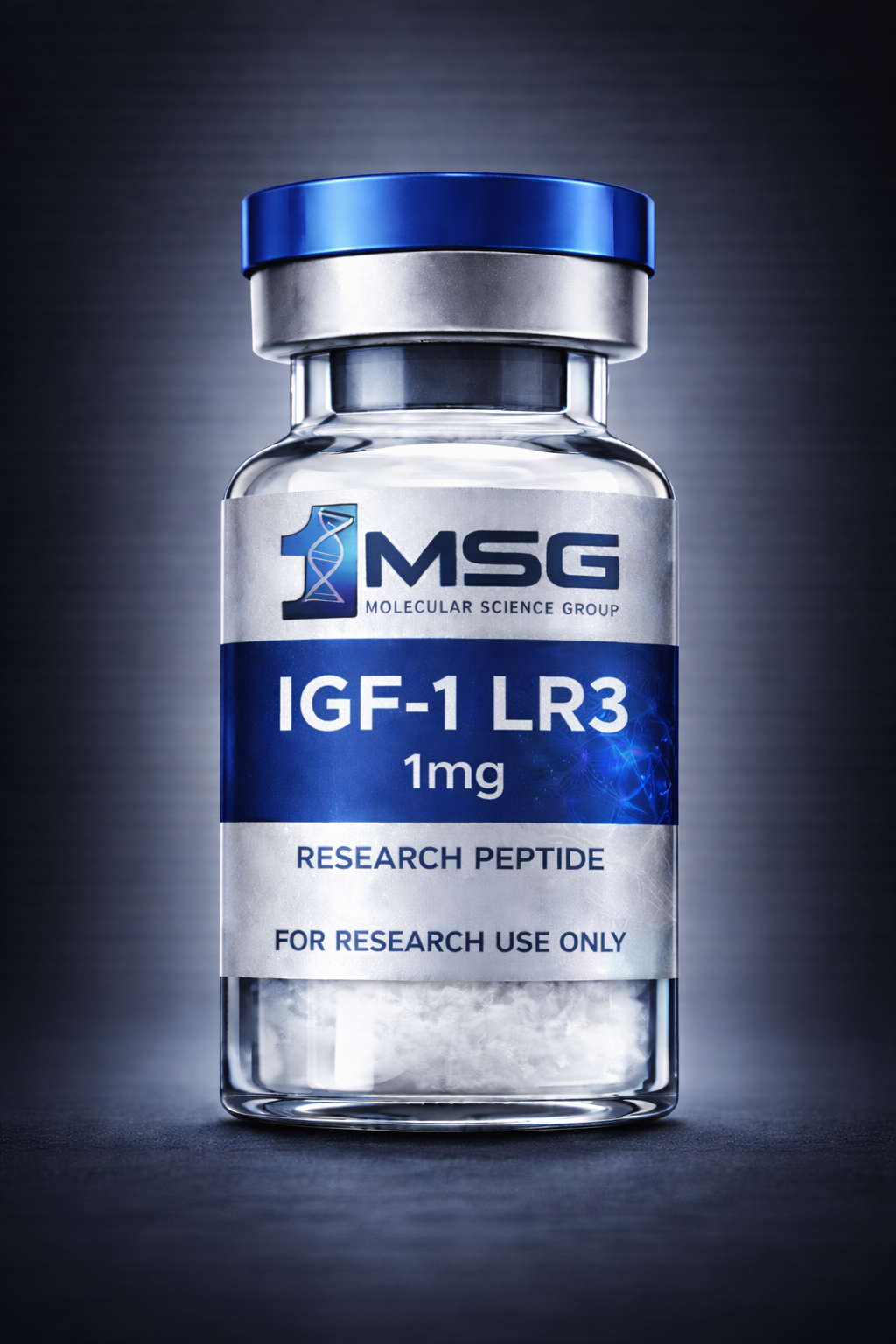
Description
What is IGF-1 LR3?
IGF-1 LR3 is a modified version of insulin-like growth factor-1 (IGF-1), a signaling molecule naturally associated with growth hormone pathways, cellular growth, and recovery processes. In plain English, it is a longer-acting IGF-1 analog that researchers study because it may remain active longer than regular IGF-1 and may interact differently with binding proteins in the body.
People browsing this product are usually interested in compounds connected to muscle growth signaling, recovery research, body composition interest, and anabolic pathway activity. IGF-1 LR3 has gained attention because it is often discussed as a more persistent form of IGF-related signaling, making it especially interesting in research settings where duration of action matters.
How IGF-1 LR3 Works
IGF-1 LR3 is being studied for how it interacts with the IGF-1 receptor and downstream pathways involved in growth, repair, and nutrient use. It is commonly compared to native IGF-1 because of two key differences: it has a modified structure and is often discussed for its extended activity profile.
- Supports IGF pathway signaling: Researchers are interested in how it may influence cellular growth and repair pathways.
- Often discussed for longer activity: IGF-1 LR3 is commonly noted for lasting longer than standard IGF-1 in research discussions.
- Studied for anabolic signaling: It has gained attention for its relationship to muscle cell activity and protein synthesis pathways.
- Interest in nutrient partitioning: Some research conversations focus on how IGF-related compounds may influence how nutrients are directed toward tissue-building processes.
Because IGF-1 sits downstream of growth hormone signaling, IGF-1 LR3 is often discussed alongside growth hormone pathway research, recovery models, and body composition studies.
Why IGF-1 LR3 Is Getting Attention
Researchers are interested in IGF-1 LR3 because it combines the familiarity of IGF biology with a structure designed for greater persistence. That makes it a frequent topic in discussions around growth-factor signaling, tissue response, and post-training recovery interest.
It is often discussed for:
- Recovery research involving muscle and connective tissue signaling
- Body composition interest related to lean mass pathways
- Growth hormone and IGF pathway studies
- Cellular repair and regeneration models
- Comparisons with standard IGF-1 and other growth-related peptides
For many customers, the appeal is simple: IGF-1 LR3 is one of the better-known compounds in the peptide space for those following research on growth signaling, performance-related recovery interest, and anabolic pathway activity.
Potential Benefits Being Studied
While research is ongoing, IGF-1 LR3 has shown interest in studies and research discussions involving:
- Muscle cell growth signaling
- Recovery support pathways
- Lean tissue development interest
- Protein synthesis-related mechanisms
- IGF receptor activation
- Body composition research
- Nutrient utilization and partitioning interest
These are the main reasons it has gained attention among those exploring advanced peptide and growth-factor compounds. Rather than being viewed as just another growth hormone category item, IGF-1 LR3 is often seen as a more targeted way to study IGF-driven signaling.
What Makes IGF-1 LR3 Stand Out
There are many compounds associated with growth and recovery research, but IGF-1 LR3 stands out because it is commonly compared to regular IGF-1 for its longer-acting profile and strong relevance to IGF receptor signaling.
- Modified IGF-1 analog with distinct research interest
- Longer activity window than standard IGF-1 in common comparisons
- Frequently discussed in body composition and recovery circles
- Relevant to growth hormone downstream signaling
- Popular in peptide research catalogs due to high recognition and demand
If you are looking at IGF-1 LR3, you are likely interested in a compound that is not just tied to general growth hormone conversation, but specifically to IGF pathway activity, tissue response, and recovery-related research attention.
Important Research Context
IGF-1 LR3 is intended for research use only. It is not described as a treatment, cure, or diagnostic tool. Interest in this compound comes from its role in laboratory and investigational settings where researchers study growth-factor signaling, recovery pathways, and body composition mechanisms.
For customers comparing products in this category, IGF-1 LR3 remains one of the most recognized names because it directly connects to IGF biology, anabolic signaling, and long-acting growth-factor research interest.
Reviews
There are no reviews yet.