
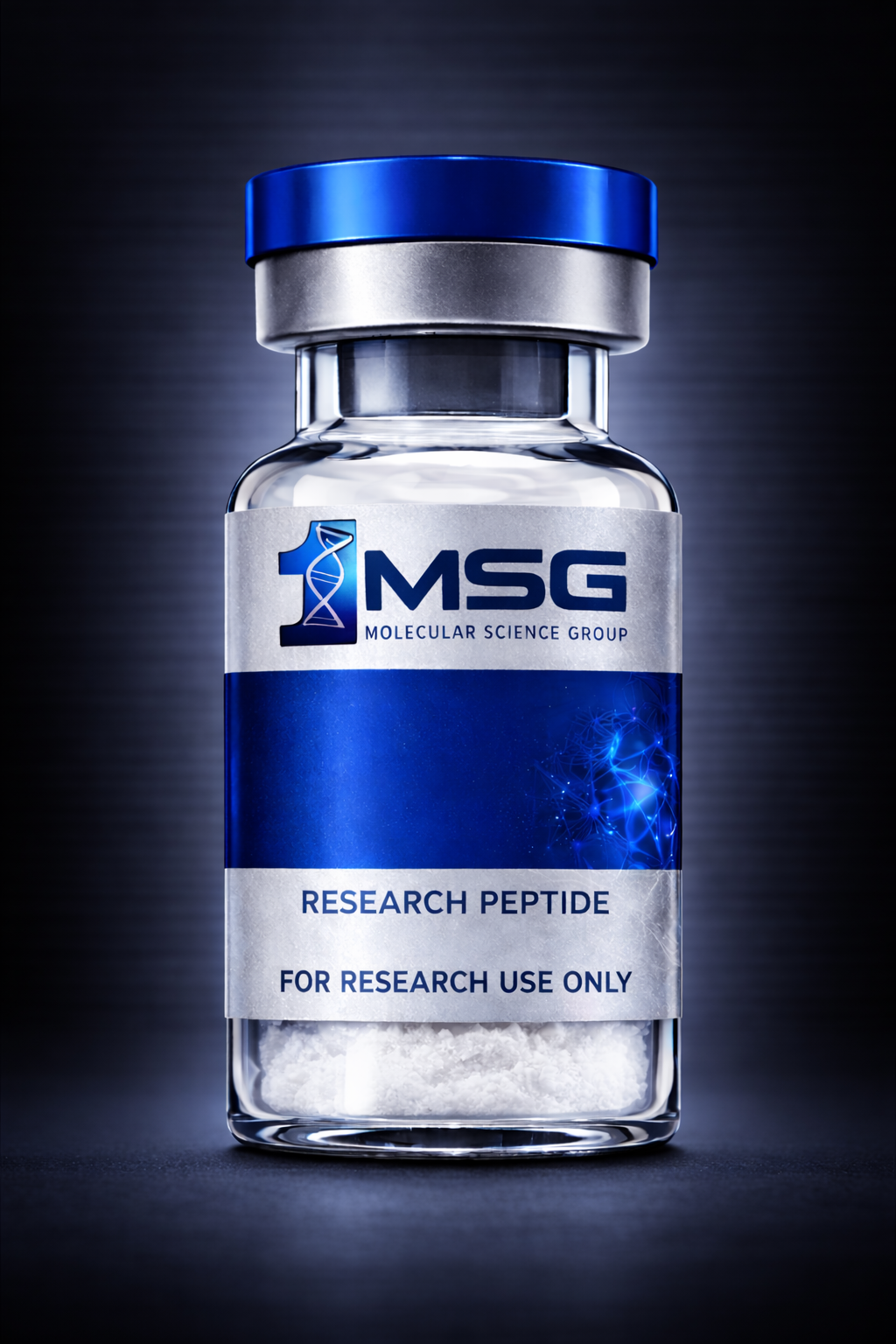
Description
What is KissPeptin-10?
KissPeptin-10 is a short peptide fragment derived from the larger kisspeptin family, a group of signaling molecules best known for their involvement in reproductive hormone regulation. In plain English, it is a peptide being studied because it helps signal the body’s reproductive hormone control system, especially the pathways that influence gonadotropin-releasing hormone (GnRH) activity.
Researchers are interested in KissPeptin-10 because it acts upstream in a key endocrine communication chain. That means it does not simply mimic a downstream hormone. Instead, it is being studied for how it may help trigger or influence the body’s own signaling process involving GnRH, luteinizing hormone (LH), and other reproductive-axis messengers.
For customers browsing research peptides, KissPeptin-10 stands out as a specialized compound with strong relevance to neuroendocrine signaling, reproductive biology, fertility research, and hormone pathway studies. It is often discussed anywhere researchers want to better understand how the brain and endocrine system communicate.
How KissPeptin-10 Works
KissPeptin-10 is being studied for its interaction with the KISS1 receptor, also known as GPR54. This receptor is closely tied to reproductive hormone signaling. When this pathway is activated in research settings, it has shown interest for influencing the release of GnRH from the hypothalamus, which can then affect downstream hormones such as LH and follicle-stimulating hormone (FSH).
In simple terms, the pathway is commonly described like this:
- KissPeptin-10 interacts with kisspeptin receptors
- This may stimulate GnRH signaling
- GnRH signaling can influence LH and FSH release
- These downstream hormones are central to reproductive endocrine function
Because of this upstream role, KissPeptin-10 has gained attention as more than just another peptide in the hormone category. It is often studied as a signaling initiator within the reproductive axis rather than as a direct replacement for downstream hormones.
Why KissPeptin-10 Is Getting Attention
KissPeptin-10 has become increasingly interesting in peptide and endocrine research because of how central kisspeptin signaling appears to be in reproductive physiology. Researchers are interested in it for several reasons:
- It is closely linked to hypothalamic signaling, making it relevant for neuroendocrine research
- It has shown interest in studies involving LH release and reproductive hormone pulsatility
- It is often discussed for fertility-related pathways and pubertal signaling research
- It is commonly compared to downstream hormone-modulating compounds because it works earlier in the signaling cascade
- It may help researchers explore natural endocrine communication rather than only isolated hormone endpoints
This is one reason KissPeptin-10 is frequently mentioned in discussions about reproductive signaling integrity, hormone rhythm studies, and the broader control systems that govern endocrine output.
Potential Benefits Being Studied
As a research peptide, KissPeptin-10 is being studied for its possible relevance in several areas of scientific interest. These are not established medical outcomes, but they help explain why the compound continues to receive attention.
- GnRH pathway signaling and upstream reproductive hormone regulation
- LH and FSH response patterns in endocrine studies
- Fertility-related research models involving hypothalamic-pituitary-gonadal axis function
- Neuroendocrine communication between the brain and reproductive system
- Puberty and developmental signaling research where kisspeptin pathways are often discussed
- Hormone pulsatility studies focused on timing, signaling rhythm, and endocrine coordination
Because of these areas of interest, KissPeptin-10 is often viewed as a peptide with strong research relevance when the goal is to study how reproductive signaling begins and how it is coordinated upstream.
What Makes KissPeptin-10 Stand Out
Many research peptides are discussed for downstream effects, but KissPeptin-10 stands out because it is tied to the control layer of reproductive hormone signaling. That makes it especially appealing in studies where the objective is to understand signaling initiation rather than only end-stage hormone levels.
- Upstream mechanism: often studied before the GnRH-LH/FSH cascade fully unfolds
- Strong endocrine relevance: closely associated with reproductive axis signaling
- Neuroendocrine interest: connects brain signaling to hormonal output
- Widely discussed in fertility-related research: especially where natural signaling pathways are the focus
- Useful for mechanistic investigation: helps researchers examine communication between receptor activation and hormone response
In practical catalog terms, KissPeptin-10 appeals to researchers looking for a peptide that is specific, biologically interesting, and highly relevant to endocrine pathway research.
Common Comparisons in Research Discussions
KissPeptin-10 is commonly compared to other compounds involved in hormone signaling, but the comparison is not always one-to-one. Some compounds are discussed for direct hormone stimulation or suppression, while KissPeptin-10 is notable because it is being studied for how it may influence the body’s own reproductive signaling hierarchy.
This distinction matters. Researchers interested in upstream signaling, receptor-mediated endocrine communication, and physiologic hormone cascade initiation often find KissPeptin-10 especially compelling.
Important Research Notes
KissPeptin-10 is sold for research use only. It is not approved to diagnose, treat, cure, or prevent any disease. Any discussion of benefits refers to areas of scientific interest and ongoing study attention, not guaranteed outcomes.
If you are exploring peptides with relevance to reproductive signaling, GnRH pathway activity, LH response, or neuroendocrine hormone regulation, KissPeptin-10 is a highly relevant compound with clear research interest and a mechanism that continues to attract attention.
Reviews
There are no reviews yet.