
Description
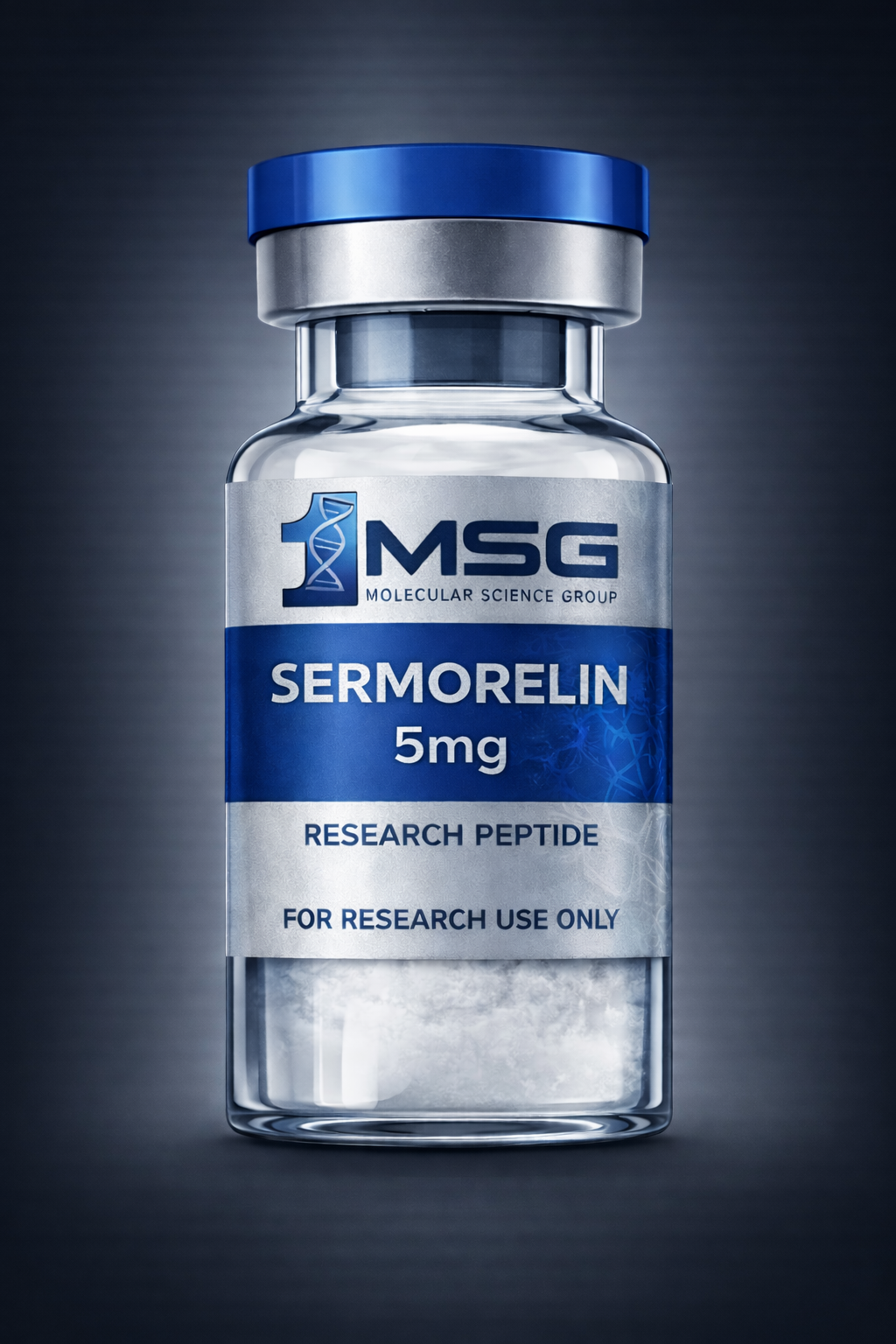
What is Sermorelin?
Sermorelin is a synthetic peptide modeled after a portion of growth hormone-releasing hormone (GHRH), the natural signal the body uses to tell the pituitary gland to release growth hormone. In plain English, that means Sermorelin is being studied as a way to support the body’s own growth hormone signaling pathway rather than replacing growth hormone directly.
This distinction is a big reason why Sermorelin continues to attract interest. Researchers often look at it in connection with growth hormone output, IGF-1 related pathways, recovery, body composition, restorative sleep patterns, and healthy aging discussions. It is one of the best-known peptides in the growth hormone category and is commonly compared to other compounds that influence GH release.
How Sermorelin Works
Sermorelin works upstream in the growth hormone pathway. It is being studied for how it interacts with receptors involved in signaling the pituitary to release endogenous growth hormone in a more physiologic pattern.
- Mimics GHRH signaling: Sermorelin is designed to resemble the body’s natural growth hormone-releasing hormone.
- Stimulates pituitary response: Researchers are interested in how it may encourage the pituitary gland to release growth hormone.
- Supports downstream pathways: Growth hormone signaling is often discussed alongside IGF-1 activity, recovery processes, tissue repair interest, and body composition research.
- Works through natural signaling: Because it acts as a signaling peptide rather than direct GH, it is often discussed as a more pathway-oriented approach in research settings.
Put simply, Sermorelin is not growth hormone itself. It is being studied for how it may prompt the body to produce and release more of its own GH signal.
Why Sermorelin Is Getting Attention
Sermorelin has gained attention because growth hormone pathways remain a major area of interest in performance, recovery, and age-related wellness research. Customers and researchers alike often look at Sermorelin when exploring compounds connected to:
- Recovery support research
- Lean mass and body composition interest
- Sleep quality discussions
- Exercise adaptation and training recovery
- Healthy aging and vitality-related study attention
Another reason for its popularity is that Sermorelin is commonly compared to direct growth hormone products. That comparison comes up because Sermorelin works by signaling the body’s existing endocrine system, which many researchers find especially interesting when studying more natural GH release patterns.
Potential Benefits Being Studied
While outcomes can vary and research is still evolving, Sermorelin is often discussed for several areas of scientific and clinical interest:
- Growth hormone pathway support through GHRH receptor signaling
- IGF-related pathway interest as part of downstream endocrine activity
- Recovery and repair research involving training stress and tissue turnover
- Body composition interest, especially in studies looking at lean mass and fat metabolism
- Sleep-related attention, since GH release is closely tied to normal sleep cycles
- Energy, vitality, and performance discussions in age-related or recovery-focused research settings
These are areas being studied for scientific interest, not guaranteed outcomes. Still, they help explain why Sermorelin remains one of the most recognized names in the peptide and growth hormone category.
What Makes Sermorelin Stand Out
There are many compounds in the growth hormone and recovery space, but Sermorelin stands out for a few key reasons:
- Well-known peptide profile: It has been discussed for years in endocrine and peptide research.
- Targets an upstream signal: Instead of replacing GH, it is being studied for how it encourages natural release.
- Broad research relevance: It is often discussed in connection with recovery, body composition, sleep, and healthy aging interest.
- Common comparison point: Sermorelin is frequently used as a reference when comparing GHRH-based peptides and other GH secretagogues.
For many customers browsing this category, that combination of familiarity, mechanism-based interest, and broad research relevance is exactly what makes Sermorelin worth a closer look.
Sermorelin Compared to Other Growth Hormone Peptides
Sermorelin is often discussed alongside other peptides that influence GH pathways, including compounds that act through different receptors or combine multiple signaling mechanisms. What makes Sermorelin notable is that it is specifically tied to the GHRH side of the pathway. That means researchers interested in more targeted growth hormone-releasing hormone signaling often keep Sermorelin on their shortlist.
In practical terms, people browsing products in this category are usually looking for compounds that are being studied for:
- Recovery-focused support
- Body composition and lean tissue interest
- Endocrine signaling research
- Age-related GH pathway changes
Sermorelin fits naturally into those conversations because it is a recognizable peptide with a clear mechanism and ongoing study attention.
Who Is Interested in Sermorelin?
Sermorelin commonly appeals to customers and researchers exploring the intersection of growth hormone signaling, recovery, body composition, and vitality-related research. It is especially relevant for those comparing peptide options in the GH category and looking for a compound with a long-standing reputation and a mechanism that is easy to understand.
If you are browsing growth hormone and recovery products, Sermorelin is worth considering because it is simple in concept, widely recognized, and still highly relevant in peptide research discussions.
Important Research Perspective
Sermorelin is a peptide of ongoing scientific interest. It is being studied for its role in growth hormone-releasing hormone signaling and related downstream pathways, including recovery, body composition, and IGF-associated research areas. It should be viewed as a research-focused compound, and discussions around it should remain grounded in mechanism, study interest, and product relevance rather than guaranteed effects.
Reviews
There are no reviews yet.