
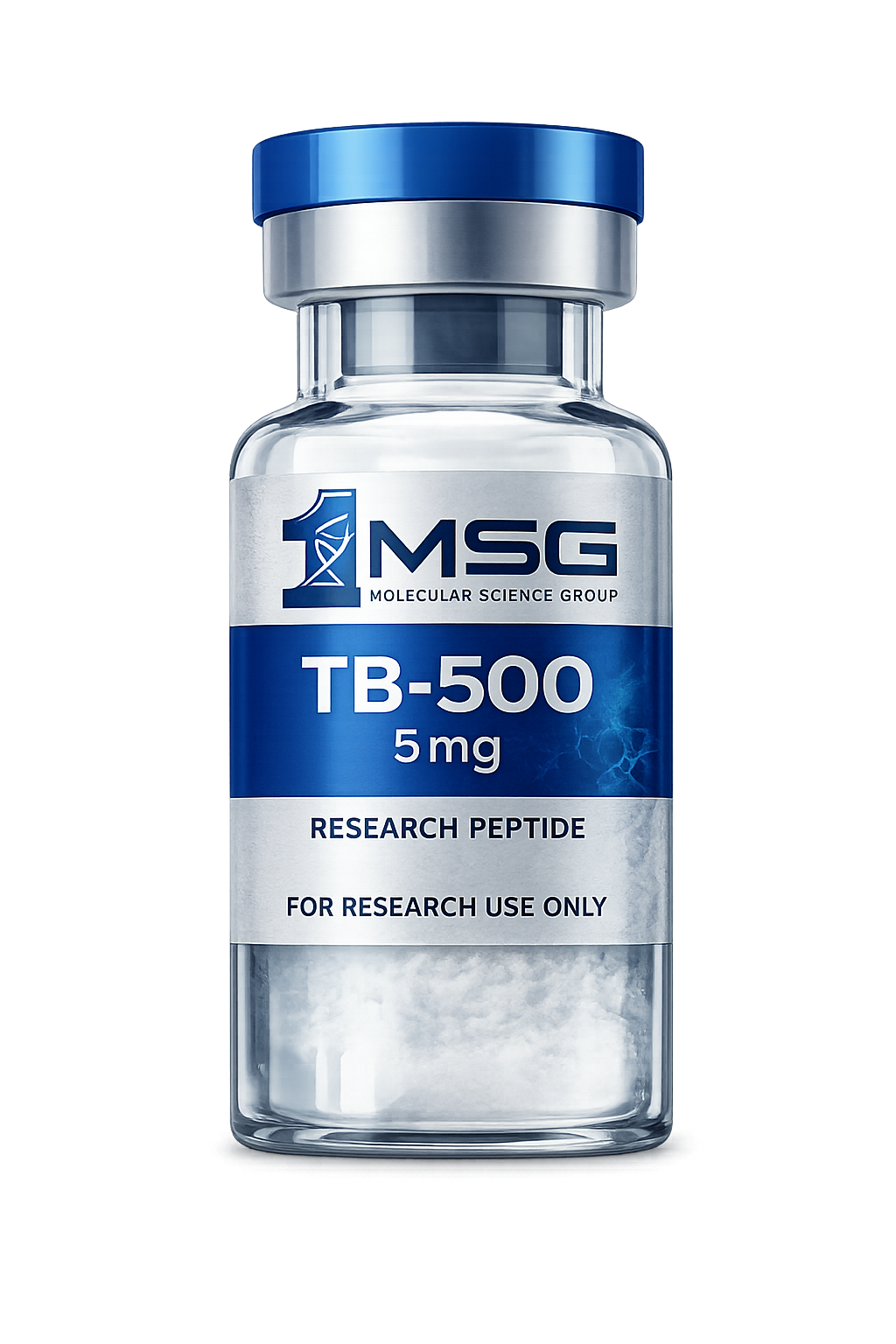
Description
What is TB-500?
TB-500 is a synthetic peptide modeled after an active region of thymosin beta-4, a naturally occurring protein found in many tissues throughout the body. In plain English, it is a research peptide that has become well known for its connection to recovery, tissue repair signaling, mobility support, and cellular movement.
People browsing TB-500 are usually looking at it because it is often discussed in connection with soft tissue recovery, muscle strain models, flexibility, and overall repair-related research. It has gained attention for how it may influence the way cells move to areas of stress and how tissues reorganize during recovery.
Unlike compounds that are mainly discussed for one narrow pathway, TB-500 is often described as a broad recovery-interest peptide. That is one reason it continues to attract attention in peptide research communities.
How TB-500 Works
TB-500 is being studied for its relationship with actin, an important structural protein involved in cell shape, movement, and repair processes. In simple terms, actin helps cells move where they need to go. Researchers are interested in TB-500 because it may support signaling involved in:
- Cell migration during recovery processes
- Tissue remodeling after physical stress
- Repair-related signaling in muscle and connective tissue models
- Flexibility and mobility interest in movement-focused studies
- Blood vessel support processes that are often discussed in healing-related research
This is why TB-500 is commonly compared to other recovery peptides, yet it stands apart because of its reputation for system-wide recovery interest rather than being discussed only for a single tissue type.
Why TB-500 Is Getting Attention
TB-500 has gained attention because researchers are interested in compounds that may support the body’s natural repair communication systems. In studies and discussions, TB-500 is often mentioned when the focus is on recovery efficiency, movement comfort, tissue resilience, and post-stress restoration.
It is also commonly discussed alongside other peptides in the recovery category because of its broad appeal in research involving:
- Muscle recovery interest
- Tendon and ligament research attention
- Mobility and flexibility discussions
- Exercise-related recovery models
- General tissue support studies
For many customers, the appeal is simple: TB-500 is one of the best-known peptides being studied for recovery-focused applications, and it continues to be a frequent topic in peptide research due to its versatile profile.
Potential Benefits Being Studied
Research interest in TB-500 commonly centers around the following areas:
- Recovery support after physical stress
- Tissue repair signaling in muscle and connective tissue models
- Mobility and range-of-motion interest
- Cellular migration and structural organization
- Supportive recovery environment in strain-related research settings
These are not guaranteed outcomes, but they help explain why TB-500 remains highly visible in peptide catalogs and recovery-focused product searches.
What Makes TB-500 Stand Out
What makes TB-500 especially interesting is that it is often discussed as a peptide with broad recovery relevance. Rather than being limited to one narrow mechanism, it has shown interest in studies involving multiple aspects of tissue response and repair signaling.
- Well-known in recovery research
- Commonly compared to other repair peptides
- Associated with actin-related cellular processes
- Frequently discussed for mobility and tissue support interest
- Popular among customers exploring recovery-category peptides
If you are comparing peptides in the Mitochondrial and Recovery categories, TB-500 is often one of the first names that comes up because of its strong reputation in research discussions around repair, resilience, and movement-related recovery.
Who Is Interested in TB-500?
Researchers and peptide buyers are often interested in TB-500 when exploring compounds that may be relevant to:
- Recovery-focused study protocols
- Movement and flexibility research
- Connective tissue interest
- Exercise stress and post-strain models
- Broad tissue support investigations
Its popularity comes from a combination of recognition, versatility, and strong discussion volume in peptide research spaces.
Important Research Context
TB-500 is sold for research purposes only. It is not approved to diagnose, treat, cure, or prevent any disease. Any discussion around this peptide should be understood in the context of preclinical, investigational, or research interest, not guaranteed real-world outcomes.
For customers looking for a peptide that is widely recognized, recovery-focused, and frequently discussed for tissue support and mobility-related research, TB-500 remains one of the standout options in the category.
Reviews
There are no reviews yet.