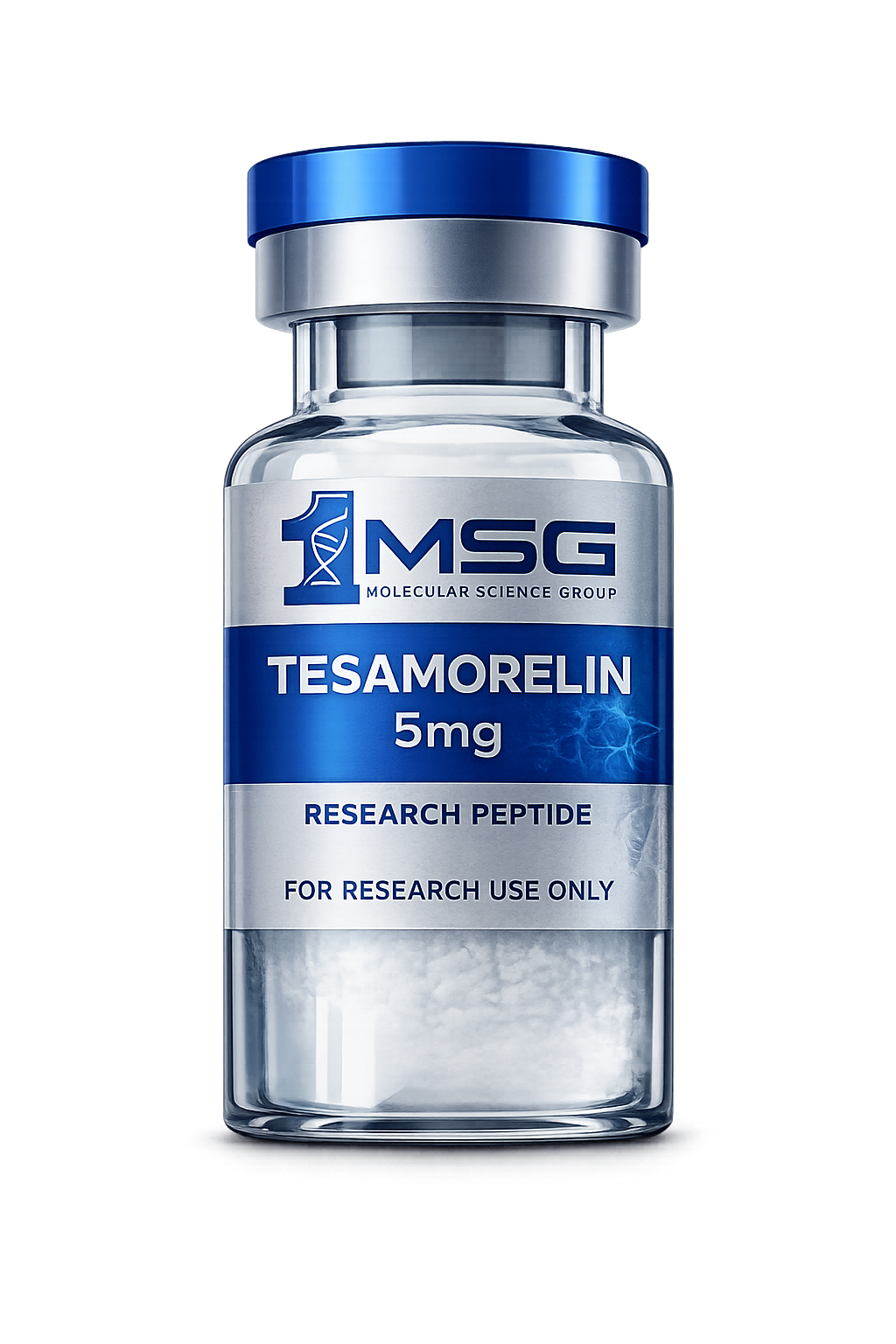
Description
What is Tesamorelin?
Tesamorelin is a synthetic peptide analog of growth hormone-releasing hormone (GHRH). In plain English, that means it is designed to signal the pituitary gland to release more of the body’s own growth hormone (GH), which can then influence downstream pathways such as IGF-1 signaling, body composition, and metabolic activity.
Unlike compounds that attempt to replace growth hormone directly, Tesamorelin is being studied for how it may work upstream in the natural GH pathway. That distinction is one reason it has gained attention among researchers interested in peptide signaling, fat metabolism, recovery-related pathways, and endocrine function.
How Tesamorelin Works
Tesamorelin is designed to mimic the action of endogenous GHRH. When this pathway is activated, the pituitary may increase pulsatile growth hormone release, which can then affect several biological processes that researchers commonly monitor.
- Supports GH signaling: Tesamorelin is being studied for its ability to stimulate the body’s own growth hormone release.
- Influences IGF-1 pathways: Increased GH signaling is often associated with changes in insulin-like growth factor 1, a key downstream marker in growth and repair research.
- Body composition interest: Tesamorelin has gained attention for research involving fat distribution and lean tissue preservation.
- Metabolic relevance: Researchers are interested in how GH-related signaling may interact with lipid metabolism, energy expenditure, and glucose-related markers.
Because it works through signaling rather than simple replacement, Tesamorelin is often discussed as a more pathway-focused peptide in the growth hormone category.
Why Tesamorelin Is Getting Attention
Tesamorelin stands out because it has been the subject of substantial clinical and research interest compared with many newer or less characterized peptides. It is commonly compared to other growth hormone secretagogues, but researchers often view it as distinct due to its GHRH-based mechanism and the amount of attention it has received in body composition and metabolic studies.
People browsing this category are often looking for compounds that are being studied for:
- Growth hormone pathway activation
- IGF-1 response
- Changes in body composition
- Recovery-related signaling
- Metabolic and fat-distribution research
Tesamorelin continues to attract interest because it sits at the intersection of hormone signaling, physique-related research, and metabolic investigation.
Potential Benefits Being Studied
Research interest in Tesamorelin often centers on several key areas. While outcomes can vary by study design and context, Tesamorelin has shown interest in studies involving:
- Growth hormone release: Being studied for its role in stimulating endogenous GH secretion.
- IGF-1 elevation: Often discussed for its relationship to downstream anabolic and repair-related pathways.
- Body composition: Commonly researched for changes related to fat mass, especially central fat distribution, and lean mass support.
- Metabolic markers: Has gained attention for possible effects on lipid handling, energy metabolism, and glucose regulation in research settings.
- Recovery interest: Researchers are interested in how GH and IGF-related signaling may connect to tissue repair and training recovery pathways.
These are some of the main reasons Tesamorelin is frequently discussed by customers comparing advanced peptides in the growth hormone space.
What Makes Tesamorelin Stand Out
There are many peptides in the broader GH and performance-research category, but Tesamorelin has a few characteristics that make it especially notable:
- It is a GHRH analog, not just another general secretagogue.
- It works by encouraging natural GH release through upstream signaling.
- It is widely recognized in research discussions involving body composition and metabolic interest.
- It is commonly compared to other GH-related peptides because of its targeted mechanism and strong study visibility.
For customers exploring peptide options, this makes Tesamorelin appealing as a compound with a clear mechanism and a strong research profile.
Who Is Interested in Tesamorelin?
Tesamorelin is often of interest to researchers and informed buyers who are specifically looking into:
- Growth hormone pathway peptides
- IGF-related signaling compounds
- Body recomposition research
- Fat metabolism and metabolic function studies
- Recovery and tissue-support pathways
It is especially relevant for those who want a compound that is easy to understand conceptually: Tesamorelin tells the body to release more of its own growth hormone, which is why it continues to be studied so closely.
Important Research Perspective
Tesamorelin is a research-focused peptide that has gained attention for its role in GH signaling, IGF pathways, body composition interest, and metabolic investigation. It should be viewed as a compound of scientific and educational interest, not as a guaranteed solution or outcome-based product.
If you are comparing peptides in the growth hormone category, Tesamorelin remains one of the most recognized names due to its mechanism, study attention, and relevance to current peptide research discussions.